Measure + Place | Calipers and Exact Geometry for Laser Cutting
Design brief
Create a simple holder for measured classroom objects such as markers, pencils, screwdrivers, drill bits, or small electronics tools. The openings must come from real measurements, not a generic file or guessed diameter.
Measure the object
Use calipers correctly and record units. Measure more than one example when nominally identical objects may vary. Identify the controlling dimension: outside diameter, widest body, collar, taper, handle shape, or removal clearance.
Build the layout
- Create one opening from an exact measured dimension.
- Decide what clearance the task requires; do not silently treat a nominal measurement as a finished fit.
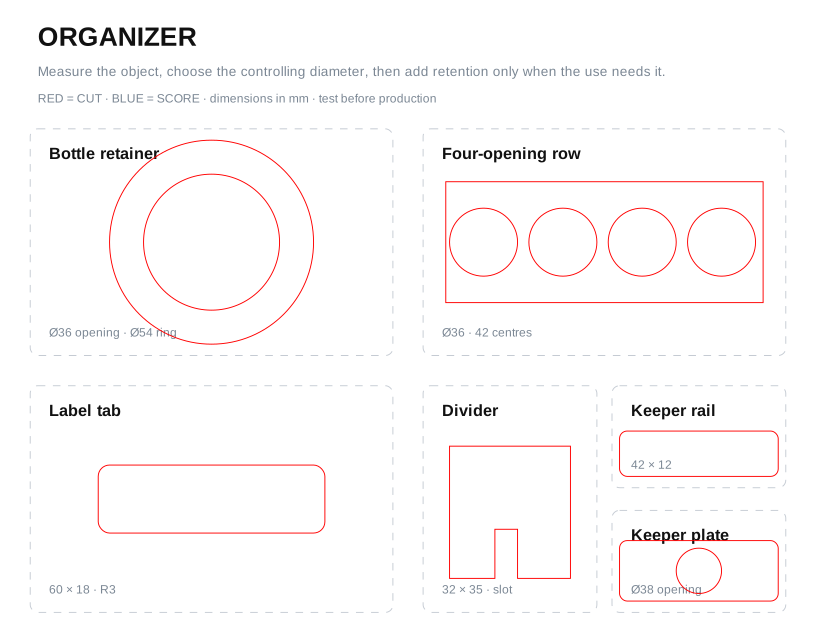
- Duplicate the opening into a controlled row or array.
- Set centre-to-centre spacing and edge margins numerically.
- Align labels and openings consistently.
- Check that the remaining material between openings is strong enough for the intended use.
Use circles, holes, slots, rulers, and spacing templates as editable references. The source geometry is a starting point; the student’s measured object determines the final design.
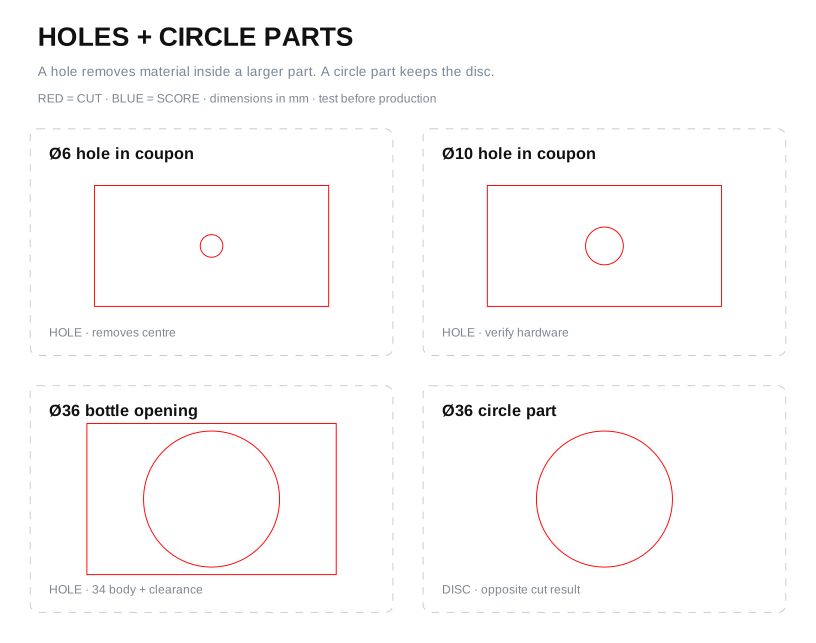
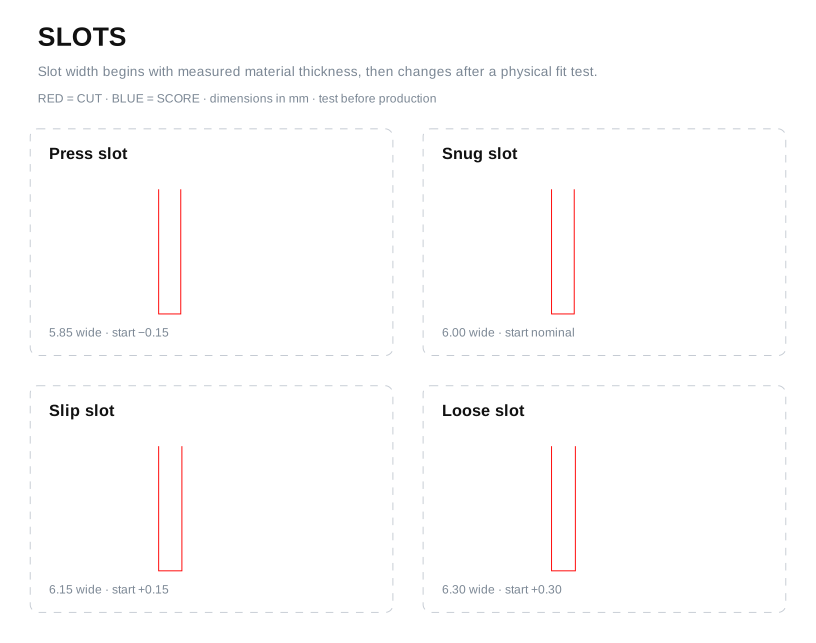
For the first controlled organizer exercise, compare the Hole, Slot and Organizer palettes. Copy named groups, enter dimensions numerically, and make every repeated opening from one checked original.
Draw front, top and side views on the planning worksheet before building the digital layout. Use the Paper-to-Inkscape workflow for datums, grouping, alignment and preflight.
For a row, grid, staggered, radial or perimeter layout, the Fabrication Plate Builder can turn the checked measurements into a reproducible true-size SVG. It validates boundaries and overlap, but the calibration lesson is still required to decide the finished fit.
Evidence
Submit a measurement table, dimensioned layout, fabrication file, fit observation, and one revision. A visually even layout is not enough if tools bind, fall through, or cannot be removed easily.
Ontario curriculum relevance: Useful for TIJ1O, TMJ2O, TDJ2O, TCJ2O, TEJ2O, and TTJ2O contexts involving measurement, precision, layout, repeated geometry, tool organization, and prototype evaluation.
Next: learn why the measured opening and the cut result can differ in Material Fit + Calibration.